
Rainwater harvesting
Rainwater Harvesting Consultant in Bangalore
Leading rainwater harvesting system consultant, expert and integrator in Bangalore. We offer rainwater harvesting systems at affordable cost to our customers.
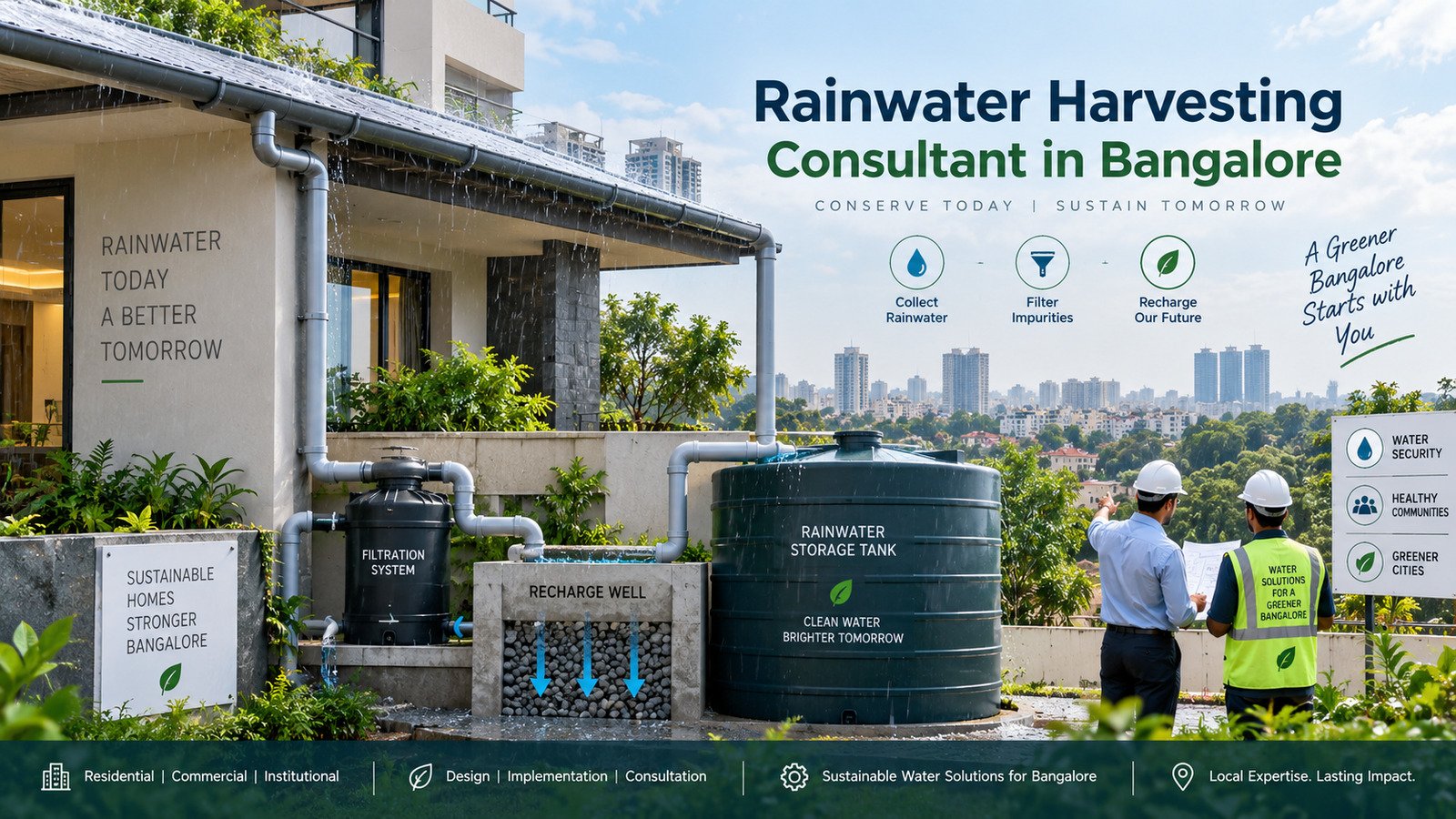
Overview
Collect, store or recharge rainwater
Rainwater harvesting refers to a process where rainwater that runs off rooftops, roads or open areas is collected and stored in an underground system or recharged into groundwater for future use.
It reduces the chances of flooding, increases groundwater supply and improves the quality of groundwater. In Bangalore, on average, every acre of land is estimated to receive about 3.6 million litres of rain annually.
If even a third of this water is harvested, the city’s flooding problems would be significantly reduced. At WaterSense, we provide solutions for rainwater harvesting systems in Bangalore across different industries and at an affordable price.
Rainwater harvesting services
- Systems for apartments, industries and commercial places
- Farmland rainwater harvesting
- Methods including filters and pits with metals
- Rooftop rainwater harvesting
Installation locations
Where WaterSense installs rainwater harvesting systems
01
Individual homes
02
Schools and colleges
03
Clubs
04
Hospitals
05
Industries
06
Apartments
Process of setup
Plan the system around the site
A WaterSense rainwater harvesting system is fairly simple to set up but requires basic knowledge of hydrology and architecture. Professionals can guide a person towards the right harvesting system for maximum benefit.
In Bangalore, unless rooftop maintenance is extremely difficult, direct storage for rainwater harvesting can be set up with hardly any disruption to existing building structures and without major re-roofing.
1
Catchment
Used to collect and store the captured rainwater.
2
Conveyance system
Used to transport harvested water from the catchment to the recharge zone.
3
Flush
Used to flush out the first spell of rain.
4
Filter
Used to filter collected rainwater and remove pollutants.
5
Tanks and recharge structures
Used to store filtered water that is ready to use.
Advantages
Advantages listed by WaterSense
- Lower cost.
- Reduces the need for imported water.
- Promotes both water and energy conservation.
- Does not require a filtration system for landscape irrigation.
- The technology is relatively simple and easy to install and operate.
- Reduces soil erosion, stormwater runoff, flooding and pollution of surface water.
- Provides a source of water for landscape irrigation without chemicals, dissolved salts or minerals.
WaterSense is one of the leading manufacturers of rainwater harvesting systems in Bangalore and strives to provide customers with the best possible experience. Saving water is one of the most important aspects of modern life as we look towards a future of drought and water difficulty. Rainwater harvesting equipment installed at home can help save water for future generations.
Applications and support
Rainwater harvesting uses
Domicile rainwater harvesting
Rainwater harvesting is emerging as an intelligent option for residential water supply. A home integrated with a rainwater harvesting system combines natural processes and technology to collect, store and use rainwater.
Commercial rainwater harvesting
Office buildings, shopping centres, apartment buildings and other commercial properties can benefit from collection and reuse, reducing periodic demand stress on public water sources.
Landscape irrigation
Collected rainwater provides a source for landscape irrigation and can reduce the use of drinking water for indoor and outdoor gardens. Storage tanks can also be connected directly to an automatic irrigation system.
Rain filtration
A basic collection system catches rainwater from a roof or other surface and channels it into a container for storage. Filtration helps prevent biological degradation, odours, microorganisms, pollutants and debris.
Water standard
Rainwater contains calcium, magnesium, iron and fluoride in concentrations considered important for health. The lack of minerals may be a concern for people on a mineral-deficient diet.
Service assistance
Professionals can support routine maintenance. Regular inspection and cleaning of the catchment, gutters, filters and tanks helps protect water quality and reduce the likelihood of contamination.
Rainwater harvesting products: Multi-Siphon Tank Controller; Floating Fine Suction Filters (SAFF); Smoothing Inlet for Rain Water Filter; Vortex Fine Filter WFF.
Frequently asked questions
Rainwater harvesting questions
Are there various types of rainwater harvesting systems?
Yes. WaterSense lists six main types: rooftop rainwater harvesting, surface runoff harvesting, first flush, transportation, catchment and filter.
What is the importance of rainwater harvesting?
It helps battle water scarcity and helps preserve water for future needs.
How do I identify the rainwater harvesting system that is right for me?
Evaluate the building structure and compare it with your harvesting goals and needs. Professional consultants can help identify a suitable system based on those goals and the building structure.
What factors affect the amount of rainwater harvested?
Catchment features, the quantity of runoff and the capacity of storage tanks are the main factors that affect the amount harvested.
Where can WaterSense install rainwater harvesting systems?
The listed installation locations are individual homes, schools and colleges, clubs, hospitals, industries and apartments.
What are the main components of a rainwater harvesting system?
WaterSense lists a catchment, conveyance system, first-flush arrangement, filter, and tanks or recharge structures.
Topics: Rainwater harvesting in Bangalore, Karnataka; rainwater harvesting manufacturer and experts in India.
Discuss a rainwater harvesting system
Contact WaterSense about the building, site and harvesting goals.